
Consumer goods firms and auto companies are witnessing an upturn in rural demand, which had been lagging for most of FY24. Expectations of a bumper rabi crop harvest have helped turn the tide. The Reserve Bank of India's (RBI's) Monetary Policy Committee kept the repo rate unchanged last week, noting that as rural demand catches up, consumption is expected to support economic growth in 2024-25.

Her reasoning is simple, "It's a Tata company. No shareholder will let go of this opportunity," she told Business Standard. When asked if the other reason for lining up for the IPO is the technology sector and the fact that the combination of Tata and tech is happening after almost two decades, she replied: "The name of the company and the group matter. Tata means stability and credibility," she added.

The auto component sector grew at 5-6 per cent last year against a 13 per cent growth in 2012.
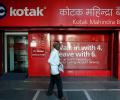
Kotak Mahindra Bank on Saturday reported a 25 per cent growth in its March quarter net profit at Rs 5,302 crore, limited by a drop in the core income due to narrow interest margins. On a standalone basis, the city-headquartered lender's Q4 net profit grew 18 per cent to Rs 4,133 crore. The FY24 consolidated net profit grew 22 per cent to Rs 18,213 crore.

Riding on a bull run, equity investors became richer by Rs 128.77 lakh crore in the 2023-24 fiscal, driven by robust fundamentals of the Indian economy, increased investment inflows and promising corporate earnings. After a muted performance in 2022-23, equity markets made a remarkable recovery in FY24, giving handsome returns to investors. The 30-share BSE Sensex climbed 14,659.83 points or 24.85 per cent in 2023-24.

The development comes after a recent notification from the Union home ministry, which has permitted companies to resume manufacturing operations and reopening of shops in red, green and orange zones with certain riders.

High lending rates, fuel prices, higher input costs and labour trouble impact profitability.

Since March 2020, when the Nifty50 plummeted to 7,511 following the announcement of a nationwide lockdown, the stock market has been on an upward trajectory. Over the next four years, the major market index has delivered a remarkable compounded annual growth rate (CAGR) of over 31.5 per cent. In the past year alone, the Nifty50 has gained by 27 per cent, hitting a succession of record highs.

Leading automakers Maruti Suzuki, Hyundai and Tata Motors on Friday reported robust sales for February as demand for sports utility vehicles continued to remain strong. Mahindra & Mahindra, Toyota Kirloskar Motor and Honda Cars also witnessed higher vehicle dispatches to dealers last month. February turned out to be the third-best month for sales for the industry ever.

Electric scooter registrations of eight companies which represent 95 per cent of the market have seen a sharp fall of over 24 per cent in May. They have registered 32,680 electric scooters against 43,098 in April according to VAHAN data from the Ministry of Road Transport and Highways available till the evening of 31 May. Auto analysts say the fall is a reflection of the initial pent up demand in the market for such vehicles,which was evinced in huge bookings, being met.

The boom in organised retail will set the tone for major economic overhaul. The ripple effect will be improved supply chains, volume output, integration into global commerce, and higher tax collection, notes T N Ninan.

State-run Indian Oil Corporation (IOCL) reported a weak performance in the fourth quarter of FY24 (January-March 2024), and the turmoil in the energy market indicates it could endure another lacklustre quarter. The oil marketing company (OMC) reported an Ebitda of Rs 10,400 crore, down 27 per cent year-on-year (Y-o-Y) due to weak reported gross refining margin (GRM) of $8.4 per barrel in Q4FY24, which was almost half the consensus expectation of $15 per barrel.

RBI's interest rate decision, macroeconomic data, global trends and trading activity of foreign investors are the crucial factors to drive equity markets in a holiday-shortened week ahead, analysts said. Markets would remain closed on Monday for Gandhi Jayanti. "While global cues will continue to dictate trends in local markets, focus will shift to RBI's monetary policy announcement on Friday. "Although the market is expecting a status quo on interest rates, global concerns like rising US dollar index and bond yields coupled with surging crude oil prices continue to weigh on investors' minds.

'Given the inherent volatility, investors should take at least a three to five-year view.'

Ford dealers in India are staring at huge losses with the automaker deciding to shut production in the country with immediate effect, automobile dealers' body FADA said on Thursday. Terming the company decision as shocking, the industry body noted that the dealers have invested over Rs 2,000 crore in creating sales infrastructure while employing around 40,000 people across the country. "The auto retail fraternity is really shocked to hear another Ford India's announcement where it has said that it will shut down production with immediate effect," FADA president Vinkesh Gulati said in a statement.

The Reserve Bank of India (RBI) has given HDFC Bank six months to migrate HDFC's home loan customers to external benchmark linked lending rate (EBLR), top sources in the bank told Business Standard. Almost half of HDFC's 5.4 million customers are home loan customers. It is mandatory for banks to link retail loans and loans to micro, medium and small enterprises to an external benchmark. Non-banking financial companies do not have such a mandate.

Mukesh Ambani-controlled Reliance Retail is planning a second-hand car market venture on the lines of Maruti's True Value and Mahindra's Automart.
The biggest bounce is in the realty sector, where the industry index jumped 80%. There's been a turnaround also in automobiles and ancillaries (up 45%). The pharma and health care indices have a welcome return of roughly 35%.
Major automobile manufacturers like Maruti Suzuki, Hyundai, Mahindra & Mahindra, Tata Motors and Toyota Kirloskar on Tuesday reported decline in domestic passenger vehicle sales in May compared to the previous month as a spike in COVID-19 cases and lockdowns across various states hit production and dispatches. The country's largest carmaker Maruti Suzuki India (MSI), which shut production from May 1 to May 16 so as to divert oxygen from industrial use for medical purposes, reported domestic dispatches to dealers at 35,293 units last month, down 75 per cent from 142,454 units in April. The company said sales of its mini cars, comprising Alto and S-Presso, declined by 81 per cent to 4,760 units in May as against 25,041 units in April this year.

'Given all the linkages, the monthly registration data for new vehicles, may well be the single most accurate indicator of India's economic health,' points out Devangshu Datta.

The Reserve Bank India's (RBI's) decision to ban the onboarding of new accounts on the "bob World" mobile digital platform led to a selloff in the Bank of Baroda (BoB) stock. The stock of the public sector bank dropped by around 3 per cent. The central bank cited "material supervisory concerns"; news reports claimed mobile numbers were randomly linked to accounts to purportedly inflate registrations on bob World.

Housing finance major HDFC and state-run Punjab National Bank on Tuesday announced up to 25 basis points increase in their lending interest rates, making their new and old loans expensive for consumers. The revised rates would be effective from March 1. Mortgage lender HDFC has increased its retail prime lending rate by 25 basis points to a minimum of 9.20 per cent.

The German luxury carmarker on Tuesday said it will invest $50 million (about Rs 230 crore) to set up a financial services subsidiary to better serve its customers besides industry as a whole.
High interest rates and lack of retail finance, coupled with rising input costs, threw plans out of gear for automakers and in November the industry saw the worst ever monthly vehicle sales with a decline of 17.98 per cent.
High interest rates and lack of retail finance, coupled with rising input costs, threw plans out of gear for automakers and in November the industry saw the worst ever monthly vehicle sales with a decline of 17.98 per cent.

The lockdown in Maharashtra will have a catastrophic impact on April sales, as dealers will not be able to realise the potential of festivities like Ugadi, Gudi Padwa, Baisakhi and Poila Boishakh.

Dealer despatches will probably be a good signal of economic turnaround or further deterioration, says Devangshu Datta.

Notwithstanding concerns about lofty valuations, smallcaps recorded their most significant monthly gain in nearly three years in November. The National Stock Exchange Nifty Smallcap 100 finished the month with a 12 per cent gain, the most since February 2021 when it rose by 12.2 per cent. After declining by 4.1 per cent in the preceding month, the Nifty Midcap 100 rose by 10.4 per cent, the most since July 2022.

'Auto, pharma, and industrials have delivered well in the recent quarter, while businesses like quick-service restaurants, consumer staples, and durables have underperformed in volume growth.'

'In the next one-and-a-half, two months you'll get decent amount of opportunities in the mid-cap and small-cap sector at lower levels.'

Despite the robust growth in this country, Apple's India share in its overall global sales remained modest -- constituting 1.5 per cent of its overall turnover of $389 billion in FY23.

Passenger vehicle (PV) retail sales rose to 184,134 units last month against 85,733 units in May this year as the COVID-19 situation improved across the country. According to the Federation of Automobile Dealers Associations (FADA), which collected vehicle registration data from 1,295 out of the 1,498 regional transport offices (RTOs), two-wheeler sales rose to 930,324 units last month as compared to 410,757 units in May.

Reliance has a 24 per cent conversion rate of 'oil-to-chemicals' at present and may be targeting 70 per cent conversion.

Smaller players manufacturing electric two-wheelers (E2Ws) are unlikely to raise prices of their models initially in 2024 in order to ensure volumes do not drop. The prices of E2Ws range from Rs 90,000 to Rs 1 lakh, the players being Lohia Auto, Godawari Electric, Emobi, etc. As India's E2W sector gears up to go past one million in 2024, manufacturers are likely to maintain price stability, underpinned by strategic independence from subsidies under Faster Adoption and Manufacturing of Electric (and Hybrid) Vehicles II (FAME II), localisation efforts, sustainability initiatives, and a focus on affordability.

'I think some of us, like Mukesh Ambani, myself and those of us who head industrial units, ought to really focus on what we can really do to make the world a safer place, maybe 50 or 100 years from now.' 'For instance, how can we deal with climate change and global warming, right now?' 'The effects of it may not be felt now; in fact, we may pay a price for it today, but it will help the generations to follow.'

Macroeconomic data announcements, the Covid situation in China and global market cues would guide Dalal Street in the first week of trading in the New Year, analysts said. Markets would also keep a track on rupee movement, Brent crude oil prices and foreign fund investment trends. "As market players attempt to understand the Fed's stance, Indian markets may respond in lockstep with their international counterparts when the Federal Open Market Committee (FOMC) minutes are made public later this week.

Domestic macroeconomic data announcements, global trends, quarterly earnings and foreign fund trading activity would dictate terms in the equity markets this week, analysts said. Besides, movement of rupee against the US dollar and global oil benchmark Brent crude price would also guide the trading pattern in the equity markets. "From a macroeconomic perspective, market participants will be closely observing key events like the upcoming release of the US manufacturing PMI data, US services PMI data and US non-farm payrolls scheduled between August 1 and August 4.

Kotak Mahindra Bank was the biggest loser from the Sensex pack, skidding 1.83 per cent, followed by Axis Bank, NTPC, Hindustan Unilever, ICICI Bank, Bharti Airtel, Reliance Industries, HCL Technologies, IndusInd Bank and Nestle. In contrast, Bajaj Finance, Bajaj Finserv, Tech Mahindra, Tata Consultancy Services, Titan, Infosys, HDFC Bank, HDFC and ITC were the gainers.
